

HSE Scientists Explain How to Identify Brain Areas Critical for Language Function During Surgery
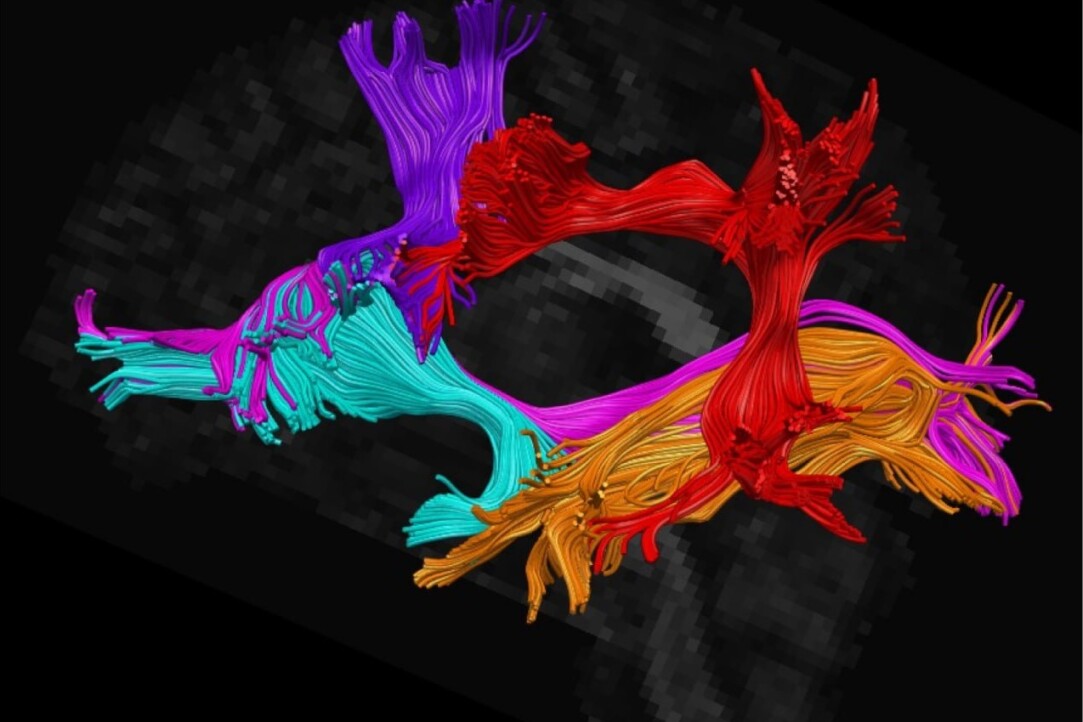
The HSE Centre for Language and Brain conducted a course on tractography, a method that enables visualisation of key brain connections and helps surgeons avoid damaging language-critical areas during surgery. The course was attended by neurosurgeons and radiologists from Moscow and other Russian regions who are interested in methods of preoperative language mapping.
Tractography is a technique for constructing 3D models of the brain’s pathways using diffusion-weighted MRI data. In the brain’s white matter, water primarily diffuses along nerve fibres, and this directionality can be reconstructed using specialised algorithms. One such method is diffusion tensor imaging (DTI), which allows researchers to assess the degree of water molecule diffusion alignment and to map the brain’s white matter tracts.
During the training course, participants not only discussed various theoretical issues related to preoperative and intraoperative mapping of language function and tracts but also gained hands-on experience in manually reconstructing models using the TrackVis software tool, based on pre-processed structural MRI images.
A dedicated lecture focused on linguistic tests for intraoperative mapping, a technique used by clinicians to identify language areas during surgery.

'Localising language function is a critical step in planning surgical interventions for patients with lesions in the language-dominant hemisphere. Experts at the Centre for Language and Brain have accumulated significant experience in preoperative language mapping, which minimises the risk of complications and improves the effectiveness of surgical interventions. We are pleased to share our knowledge and practical recommendations with our surgical colleagues to advance modern neurosurgery and improve the quality of patient care,' said Anna Komissarenko, Junior Research Fellow at the HSE Centre for Language and Brain.
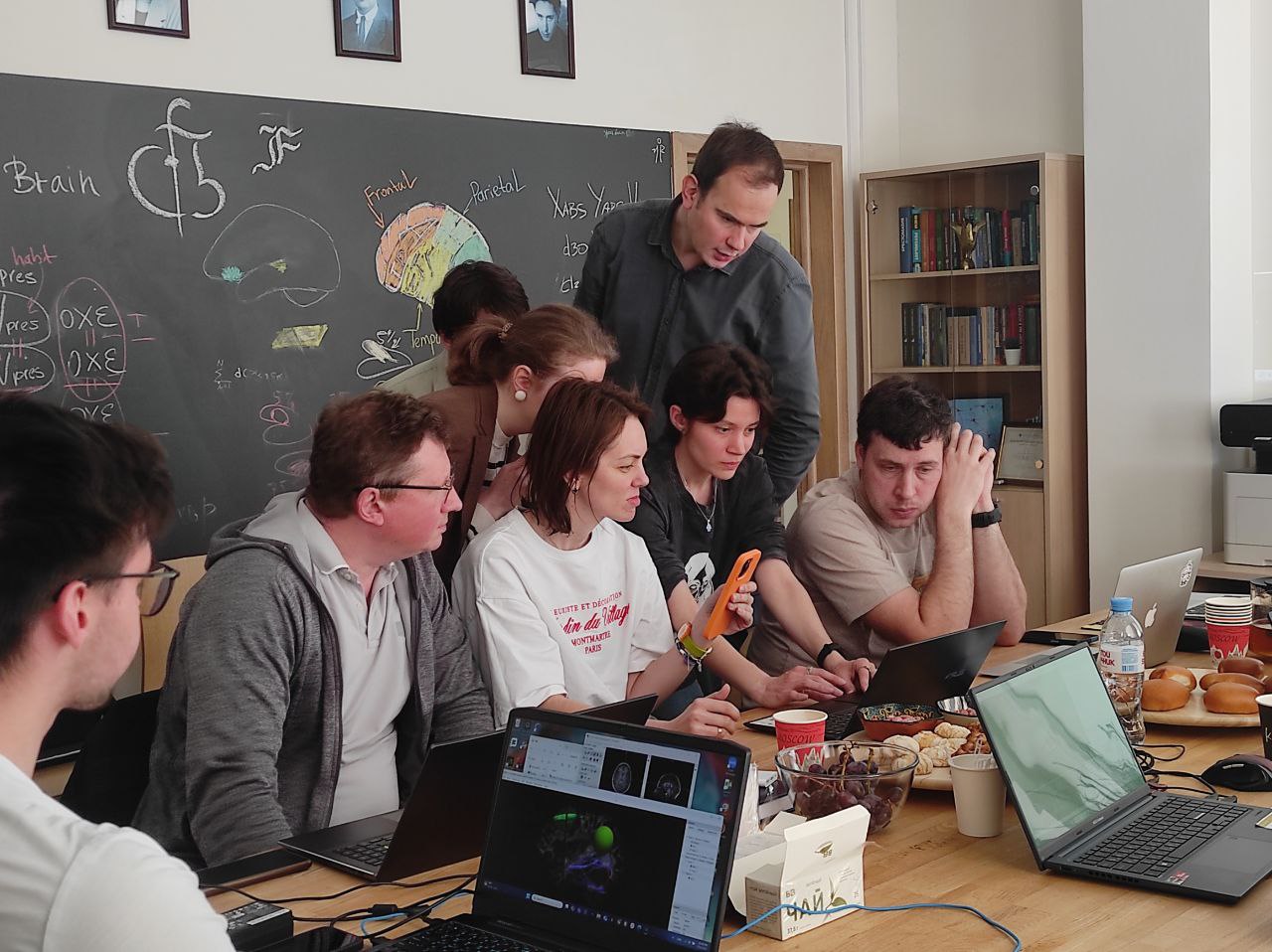
The HSE Centre for Language and Brain has extensive expertise in providing linguistic support for neurosurgical patients. An important focus of the centre’s work is the development of specialised linguistic tests to identify functionally significant language areas during the planning and performance of neurosurgical operations. The centre’s specialists are investigating how the brain’s language function reorganises in cases of tumours and epilepsy, with special emphasis on the role of white matter pathways in supporting language function. The findings are used in both research and clinical practice—during preoperative mapping and intraoperative language monitoring. The practical course generated great interest among participants and served as a platform for interdisciplinary dialogue between neurolinguists and clinicians.
Anastasia Parshunina, neurosurgeon
'During surgery, it is essential to balance the radicality of the operation with the patient’s functional status. When removing a tumour near the language area in a patient with intact language function, it is crucial that the patient retains the ability to speak and understand speech after treatment. Therefore, the ability to reconstruct tracts is essential for preoperative treatment planning and for understanding the relationship between the tumour and functionally significant structures. The course deepened our understanding of anatomical principles and demonstrated the potential of 3D modelling for preoperative planning. We are thankful to the course organisers. During the two-day course, we gained valuable theoretical knowledge and practical skills in reconstructing pathways using the TrackVis software.
The Centre for Language and Brain thanks all course participants and invites everyone to stay updated on upcoming courses and educational programmes.

See also:

HSE University to Develop Predictive Analytics System for Icebreaker Motors
Industrial automation is one of the key applications of artificial intelligence. A predictive analytics system for large electric motors is among the solutions being developed for the industry as part of HSE University’s Strategic Technological Project ‘Multi-Agent Platform of AI Solutions for Industry-Specific Tasks.’ What is predictive analytics, how can it improve the operation of electric motors, and what specialists joined forces to develop this technology? Anton Zarubin, Dean of the School of Computer Science, Physics, and Technology at HSE University–St Petersburg and the project development coordinator, explains in this interview with the HSE News Service.
Scientific Expedition to Hainan: HSE Scientists Organise Conference on Statistical AI in China
The Statistical AI Conference was held in Sanya, Hainan Island, China, from 24 to 28 August 2026. The international event brought together leading experts in statistics, machine learning, and applied AI. Alexey Naumov, Director of the AI and Digital Science Institute at the HSE Faculty of Computer Science, and Sergey Samsonov, Head of the International Laboratory of Stochastic Algorithms and High-Dimensional Inference, were among the conference organisers.
5th Fall into ML Conference to Bring Together Leading AI Researchers
The AI and Digital Science Institute at the HSE Faculty of Computer Science invites researchers, developers and everyone shaping the future of technology to the fifth, anniversary edition of the Fall into Machine Learning conference (Fall into ML 2026). The event will take place on October 23–24, 2026, at the HSE Cultural Centre in Moscow and will become the key meeting point for Russia’s AI community.
HSE University Expands Cooperation with Malaysia in Technology Foresight
HSE University researchers will take part in a study of the future of engineering education in Malaysia, while the Malaysian Industry-Government Group for High Technology (MIGHT) will use the iFORA big-data analysis system to validate the findings of its foresight research. These are the outcomes of a visit by HSE representatives to Kuala Lumpur.
Scientists Train Neural Network to Generate Process Plans from 3D Models
Researchers at the HSE FCS AI and Digital Science Institute have developed CAD2TechSpec, a framework that converts 3D models of mechanical parts into machining process plans—step-by-step instructions for machine tools. The solution aims to reduce the time required for the design and preparation of technical process documentation in mechanical engineering, aircraft manufacturing, and other high-tech industries. The study findings have been published in PeerJ Computer Science.
Biologists Discover 'Molecular Fingerprint' of Preeclampsia
Researchers at HSE University employed a new method to model hypoxia in placental cells during pregnancies complicated by preeclampsia and identified molecular markers of tissue hypoxia. Since hypoxia is one of the key mechanisms underlying preeclampsia, these findings are important for a more accurate and timely diagnosis of the disease and for the development of effective treatment methods. The paper has been published in Placenta.
Laboratory of Future Networks: HSE Telecommunications Research Institute Develops 5G/6G Research Testbed
The 5G/6G testbed at the HSE Telecommunications Research Institute is becoming a research platform, an educational laboratory, and a foundation for developing new software components for future networks. It makes it possible not only to observe how a mobile network operates, but also to change its operating conditions and measure the results: data-transmission speed, latency, errors, radio-resource utilisation, and other parameters. Based on the testbed, researchers plan to develop MIMO, O-RAN, xApp, and IAB technologies, as well as experiment with artificial intelligence.
‘Hedgehog’ Versus ‘Relatives’: Researchers Measure How the Brain Responds to Unexpected Words During Natural Speech
Russian neurophysiologists, including researchers from HSE University, have demonstrated the feasibility of using event-related fields (ERFs) to study brain activity during natural speech perception. The researchers showed that this approach can be applied not only to individual words but also to continuous speech. Their findings indicate that words whose meanings differ significantly from the preceding context require longer processing times. The study also reveals that the brain processes function words in two stages: first, it identifies their grammatical role and then uses this information to predict the next word. The study has been published in Frontiers in Human Neuroscience.
Hybrid Intelligence: Competencies in the Age of AI Discussed at Technoprom-2026
Artificial intelligence is not creating new professions, but rather transforming the nature of existing ones. This was the conclusion reached by participants in the panel session ‘Hybrid Intelligence: Digital and Human Drivers of Development,’ organised by the Institute for Statistical Studies and Economics of Knowledge (ISSEK) at HSE University as part of the 13th International Forum of Technological Development (Technoprom-2026). The experts discussed how the nature of work is changing, which skills are becoming increasingly sought after, and what prevents companies from fully capitalising on new technologies.
Scientists Develop New Solution for 6G Communication Systems
A terahertz neuromorphic circuit developed by scientists at HSE University could make 6G communication systems both more accurate and energy-efficient. The circuit enables indoor tracking of mobile devices with an accuracy of up to 99%. The results were presented at PIERS 2026, an international symposium on Photonics and Electromagnetism held in China.