

‘The Development of Creative Industries Has Become a Priority for Both Russia and Uzbekistan’
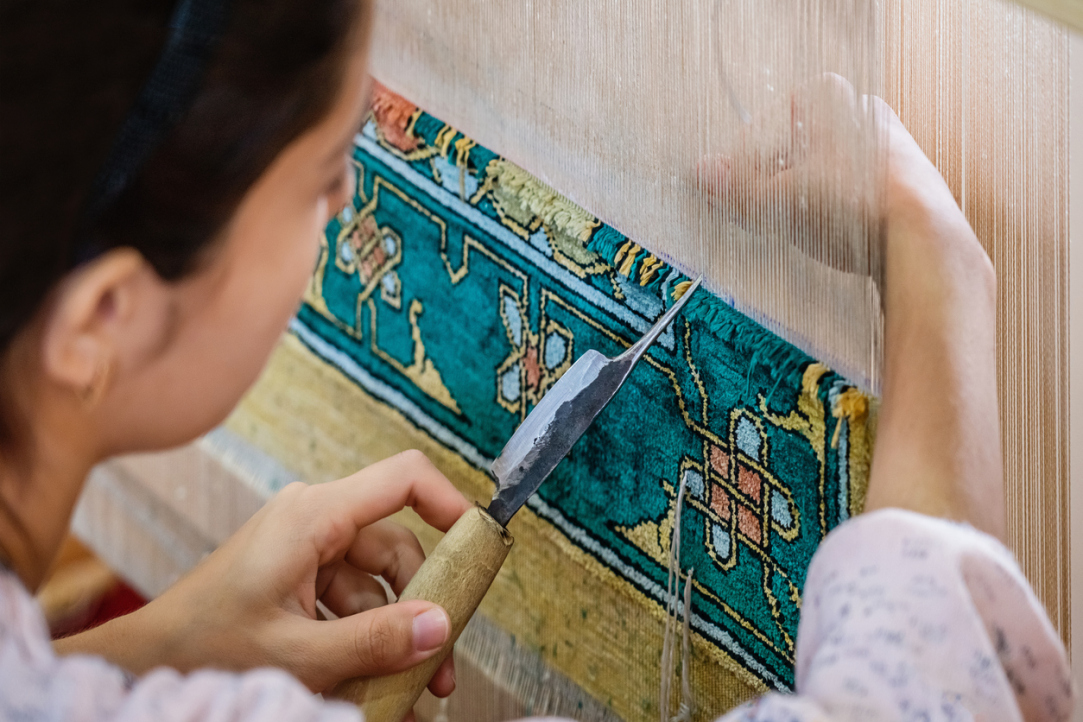
The Tourism Development Institute under the Committee for Tourism of the Republic of Uzbekistan and HSE University have signed a cooperation agreement aimed at establishing and developing academic, cultural, and other partnerships in the fields of education and tourism. The initiative for signing the agreement came from the Institute for Creative Industries Development at the HSE Faculty of Creative Industries.
The agreement envisages the creation of educational programmes and the launch of joint projects.
International cooperation in education plays a key role in the development of human capital, the strengthening of scientific potential, and the formation of global academic networks. Partnerships between leading educational institutions provide access to advanced teaching methods, research practices, and double degree programmes, all of which contribute to the training of highly qualified specialists capable of meeting the modern labour market demands.
Such cooperation not only enriches the academic environment but also promotes intercultural dialogue, the development of innovative educational models, and the strengthening of countries’ positions in the international educational landscape.
The first joint initiative launched under the partnership was the international youth competition ‘The Culture of the Republic of Uzbekistan in Contemporary Design,’ organised in collaboration with the HSE Art & Design School, the DAFES Association, the Creative City platform, and supported by the Committee for Tourism of the Republic of Uzbekistan. The committee awarded a prize fund of 10 million, 7 million, and 5 million Uzbekistani soms to the first, second, and third prize winners, respectively.
The aim of the competition is to gather contemporary design solutions based on the intangible cultural heritage of Uzbekistan, emphasise its global significance, and highlight its role in enhancing the country’s tourism potential.
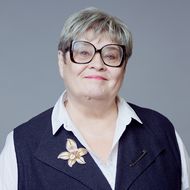
Tatyana Abankina, Academic Supervisor of the HSE Institute of Creative Industries Development, Candidate of Sciences in Economics
‘The development of creative industries has become a priority for both Russia and the Republic of Uzbekistan. Creative individuals are the backbone of the creative economy. A meeting in Vladivostok between colleagues from the Institute for Creative Industries at HSE University and representatives from Uzbekistan, held as part of the Russia–Uzbekistan Educational Forum ‘Education in Creative Industries: Shaping the Economy of the Future,’ laid the groundwork for cooperation in areas such as staff training, joint educational programmes, and collaborative projects in creative fields. The educational and research resources presented by the Institute for Creative Industries Development attracted great interest from our Uzbekistani colleagues at the Tourism Development Institute. In particular, the Creative City platform will serve as a hub for bringing together educational initiatives, creative projects, and individuals. The Genius of Place digital competition platform and the online/offline programme in Management in Creative Industries were also met with enthusiasm. Representatives of the ministry of Uzbekistan expressed interest in HSE University’s methodology and practical approach to assessing the creative potential of Russian regions. The establishment of direct contacts and participation in the international conference hosted by HSE University-St Petersburg provided an opportunity to define specific areas of collaboration and led to the drafting of a Cooperation Agreement between HSE University and the Tourism Development Institute of the Republic of Uzbekistan in the fields of education and science.’

Valery Gordin, Head of the Laboratory for Management in Culture and Tourism at HSE University-St Petersburg
‘The Laboratory for Management in Culture and Tourism at HSE University-St Petersburg has already established ties with the institute. Our Uzbekistani colleagues visited St Petersburg to participate in a seminar on cultural heritage, and our experts gave presentations at the VIII International Forum of Guides, hosted by the institute, focusing on new challenges and pathways for tourism development. We see the most promising areas of future collaboration with the Tourism Development Institute in research on the role of museums in the creation of tourism products in both Uzbekistan and Russia, as well as in the establishment of a professional development system for museum workers and tourism professionals. This will involve creating mechanisms for collaboration between these two sectors.’

Natalia Logutova, Deputy Director of the HSE Institute for Creative Industries Development
‘Enhancing the tourist appeal of regions through cultural heritage, traditional crafts and technologies, as well as developing local brands are major themes that are becoming the focus of research, analysis, and educational content for students across all programmes at the Institute for Creative Industries Development and HSE Art & Design School. Together, we have launched the Creative City platform—a community of professionals in the creative field, a kind of creative map originally built on student projects. Since then, it has expanded beyond HSE and even internationally, uniting projects from various regions and countries. This platform functions as a permanent competition system, gathering the best creative practices for working with local themes and attracting an international expert community. We hope our collaboration with the Tourist Development Institute of the Republic of Uzbekistan will lead to a significant expansion of the range and types of projects, thanks to both students participating in our joint programmes and initiatives exploring the cultural heritage of both countries. With the exchange of experiences, joint research, competitions, and exhibitions, we are looking forward to a long-term and fruitful cooperation.’
Elena Golysheva, Director of the Tourist Development Institute under the Committee for Tourism of the Republic of Uzbekistan, PhD in Economics, Senior Research Fellow
‘Undoubtedly, the signing of the cooperation agreement in education and research—initiated by the HSE Institute for Creative Industries Development—will contribute to the development of creative industries, the establishment of joint educational programmes, and the support of new youth initiatives.
This will help accelerate the promotion of cultural heritage, foster the implementation of innovative ideas, and enable the exchange of valuable experiences. Overall, this partnership is focused squarely on long-term outcomes and the mutual enrichment of academic and professional environments.
It is also essential that the agreement will contribute to training the specialists needed in creative industries. I would like to take this opportunity to once again express our gratitude to our Russian colleagues for their support and assistance in many areas. I have every confidence that our future collaboration will have a positive effect on the continued development of the tourism and creative infrastructure in both Russia and Uzbekistan.’
Alim Mukhitdinov, Head of the Department for Scientific and Innovative Projects at the Tourism Development Institute of the Republic of Uzbekistan
‘Our cooperation with HSE University opens up new horizons for joint research and education in the fields of tourism and creative industries. Signing this agreement between our two institutions is an important step towards the creation of an integrated scientific and educational platform capable of offering a modern perspective on tourism development—one that takes into account cultural, technological, and creative trends.
The Department for Scientific and Innovative Projects at the Tourism Development Institute sees particular value in the exchange of academic approaches, the implementation of joint research, the launch of educational initiatives and youth competitions such as ‘The Culture of the Republic of Uzbekistan in Contemporary Design.’ These projects help to reveal our country’s unique cultural potential and establish new standards in training professionals for the tourism sector.
We hope that this growing cooperation will serve as a strong foundation for a sustainable partnership focused on generating new knowledge, developing human capital, and promoting Uzbekistan’s cultural heritage on the international stage.’

See also:

HSE University Expands Cooperation with Malaysia in Technology Foresight
HSE University researchers will take part in a study of the future of engineering education in Malaysia, while the Malaysian Industry-Government Group for High Technology (MIGHT) will use the iFORA big-data analysis system to validate the findings of its foresight research. These are the outcomes of a visit by HSE representatives to Kuala Lumpur.
Biologists Discover 'Molecular Fingerprint' of Preeclampsia
Researchers at HSE University employed a new method to model hypoxia in placental cells during pregnancies complicated by preeclampsia and identified molecular markers of tissue hypoxia. Since hypoxia is one of the key mechanisms underlying preeclampsia, these findings are important for a more accurate and timely diagnosis of the disease and for the development of effective treatment methods. The paper has been published in Placenta.
‘Hedgehog’ Versus ‘Relatives’: Researchers Measure How the Brain Responds to Unexpected Words During Natural Speech
Russian neurophysiologists, including researchers from HSE University, have demonstrated the feasibility of using event-related fields (ERFs) to study brain activity during natural speech perception. The researchers showed that this approach can be applied not only to individual words but also to continuous speech. Their findings indicate that words whose meanings differ significantly from the preceding context require longer processing times. The study also reveals that the brain processes function words in two stages: first, it identifies their grammatical role and then uses this information to predict the next word. The study has been published in Frontiers in Human Neuroscience.
Scientists Develop Algorithm for More Reliable Processors in Data Centres
Researchers from HSE MIEM and Samara University have developed the LRF-3D algorithm to automatically bypass idle nodes in three-dimensional networks-on-chip. Thanks to its hierarchical architecture, the algorithm outperforms existing solutions in both speed and path accuracy, improving processor reliability for use in data centres, supercomputers, and AI computing. The source code and test results are publicly available.
Researchers Rank Recommendation Algorithms Using Sports Tournament Model
Researchers from the AI and Digital Science Institute at the HSE Faculty of Computer Science have developed an approach for selecting recommendation algorithms more effectively. Their approach uses pairwise comparisons of algorithms to create a tournament table, with the overall ranking based on their performance across all datasets in the tournament. This can reduce the number of algorithms that need to be tested when developing new services, saving both time and money. The study was presented at the 32nd ACM SIGKDD Conference on Knowledge Discovery and Data Mining (KDD 2026).
Researchers Develop Method for Direct Generation of Regulatory DNA
Researchers at HSE University have developed a model for generating promoters and enhancers—DNA sequences that regulate gene activity. The model works directly with DNA nucleotides, without first transforming them into a continuous numerical representation. This solution could be useful for applications in synthetic biology and gene therapy. The study results were presented at the ICLR 2026 Workshop ‘Generative AI in Genomics (Gen^2): Barriers and Frontiers.’
Researchers at HSE University and Sber Train Neural Networks to Better Predict User Preferences
The HSE FCS AI and Digital Science Institute and Sber have introduced a new architecture for recommendation systems that combines two classes of models, enabling algorithms to better predict users’ interests and needs. A preprint of the paper has been published on arxiv.org and presented at Urban ML.
HSE Graduate School of Business and Alfa-Bank Hold Summer School for Students from China
Twenty-seven students from Chinese universities took part in the international summer school ‘Digital Product Management’ organised by the HSE Graduate School of Business and Alfa-Bank. Over the course of a week, participants explored the Russian economy and business environment, learned about current technology trends, and worked through the key stages of digital product development step by step—from researching user needs and defining a problem to developing a prototype and presenting their final project.
Physicists Discover What Happens Inside a Stable Vortex
Large vortices with characteristic spiral arms are often observed in the atmosphere and the ocean. Physicists from HSE University have explained how these structures form and why they retain their shape. The researchers found that velocities at points located along the same vortex arc remain correlated even over long distances. At the same time, this correlation weakens rapidly with increasing distance from the vortex centre. These differences help explain the formation of spiral arms and may improve models of atmospheric and oceanic currents. The findings have been published in Physical Review Fluids.
HSE University and the Government of Perm Krai Expand the Development of Creative Industries
HSE University and the Government of Perm Krai have signed a strategic partnership agreement. The document, signed by HSE University President Nikita Anisimov and Perm Krai Governor Dmitry Makhonin, defines new areas of collaboration in the creative economy, education, and human resources in Primakamye.