

HSE Researchers Assess Creative Industry Losses from Use of GenAI

Speaking at the IPQuorum.Music forum on October 15, Leonid Gokhberg, HSE First Vice Rector, and Daniil Kudrin, an expert at the Centre for Industry and Corporate Projects of HSE ISSEK, presented the findings of the first study in Russia on the economic impact of GenAI on creative professions. The analysis shows that creators’ potential losses could reach one trillion roubles by 2030.
The pace of technological innovation is accelerating every year: while it took the telephone 75 years to 'take over the world,' DeepSeek reached 100 million users in just two weeks. Today, GenAI models are rapidly gaining popularity, enabling users to generate text, video, images, and audio. There are now at least 1,000 AI models on the market designed for creative tasks and capable of competing with human creators.
Experts at HSE ISSEK have developed a unique methodology for quantifying the losses faced by authors and copyright holders as a result of the adoption of AI. The study focuses on 12 creative professions that are most vulnerable to GenAI. For the first time, researchers have estimated the share of generative content in different types of creative work and assessed the income decline experienced by 'traditional' creators who do not use neural networks. Notably, the study deliberately excludes the potential positive effects of AI, such as increased productivity and reduced barriers to entry.
The findings indicate that total income losses for members of creative professions could reach 1 trillion roubles by 2030. Programmers and developers, as well as advertising and marketing specialists, are expected to be hit the hardest. Generative models have brought new players into the creative industries, including both institutional actors—such as IT companies, developers, and digital platforms—and individuals, such as amateur creators. The production and distribution of AI-generated content by these new players pose a serious threat to the revenues of writers, translators, journalists, and composers: according to experts, AI penetration in these professions will exceed 25%.
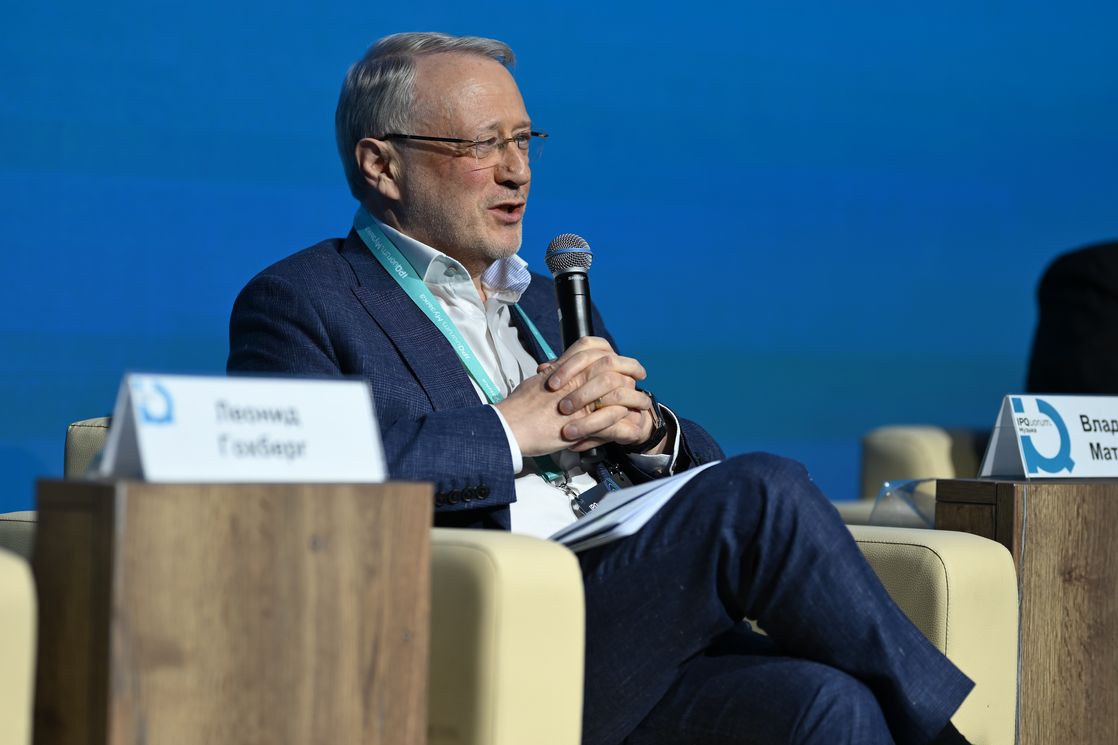
'We live in an era of exponential digital development,' says Leonid Gokhberg, First Vice Rector of HSE University. 'Innovation cannot be stopped, but it is crucial to foster a balanced dialogue between creators, technology companies, and the government. GenAI should not become a threat to creative professions. Rather, it should be viewed as a tool that complements human imagination, not replaces it.'
The researchers emphasise that current AI solutions are still far from fully replacing humans, as generative models are prone to 'hallucinations' and errors, and can pose reputational risks. In practice, AI often serves as an assistant, helping creators with editing, reference selection, translation, and technical problem-solving.
The HSE ISSEK study represents the first step toward a systematic analysis of GenAI’s impact on the intellectual property market and toward developing solutions that balance innovation with the protection of creators’ interests.
A full recording of the plenary session 'Authors in the Service of AI' is available here.

See also:

‘Hedgehog’ Versus ‘Relatives’: Researchers Measure How the Brain Responds to Unexpected Words During Natural Speech
Russian neurophysiologists, including researchers from HSE University, have demonstrated the feasibility of using event-related fields (ERFs) to study brain activity during natural speech perception. The researchers showed that this approach can be applied not only to individual words but also to continuous speech. Their findings indicate that words whose meanings differ significantly from the preceding context require longer processing times. The study also reveals that the brain processes function words in two stages: first, it identifies their grammatical role and then uses this information to predict the next word. The study has been published in Frontiers in Human Neuroscience.
Hybrid Intelligence: Competencies in the Age of AI Discussed at Technoprom-2026
Artificial intelligence is not creating new professions, but rather transforming the nature of existing ones. This was the conclusion reached by participants in the panel session ‘Hybrid Intelligence: Digital and Human Drivers of Development,’ organised by the Institute for Statistical Studies and Economics of Knowledge (ISSEK) at HSE University as part of the 13th International Forum of Technological Development (Technoprom-2026). The experts discussed how the nature of work is changing, which skills are becoming increasingly sought after, and what prevents companies from fully capitalising on new technologies.
Scientists Develop New Solution for 6G Communication Systems
A terahertz neuromorphic circuit developed by scientists at HSE University could make 6G communication systems both more accurate and energy-efficient. The circuit enables indoor tracking of mobile devices with an accuracy of up to 99%. The results were presented at PIERS 2026, an international symposium on Photonics and Electromagnetism held in China.
Researchers Rank Recommendation Algorithms Using Sports Tournament Model
Researchers from the AI and Digital Science Institute at the HSE Faculty of Computer Science have developed an approach for selecting recommendation algorithms more effectively. Their approach uses pairwise comparisons of algorithms to create a tournament table, with the overall ranking based on their performance across all datasets in the tournament. This can reduce the number of algorithms that need to be tested when developing new services, saving both time and money. The study was presented at the 32nd ACM SIGKDD Conference on Knowledge Discovery and Data Mining (KDD 2026).
Researchers Develop Method for Direct Generation of Regulatory DNA
Researchers at HSE University have developed a model for generating promoters and enhancers—DNA sequences that regulate gene activity. The model works directly with DNA nucleotides, without first transforming them into a continuous numerical representation. This solution could be useful for applications in synthetic biology and gene therapy. The study results were presented at the ICLR 2026 Workshop ‘Generative AI in Genomics (Gen^2): Barriers and Frontiers.’
Researchers at HSE University and Sber Train Neural Networks to Better Predict User Preferences
The HSE FCS AI and Digital Science Institute and Sber have introduced a new architecture for recommendation systems that combines two classes of models, enabling algorithms to better predict users’ interests and needs. A preprint of the paper has been published on arxiv.org and presented at Urban ML.
Physicists Discover What Happens Inside a Stable Vortex
Large vortices with characteristic spiral arms are often observed in the atmosphere and the ocean. Physicists from HSE University have explained how these structures form and why they retain their shape. The researchers found that velocities at points located along the same vortex arc remain correlated even over long distances. At the same time, this correlation weakens rapidly with increasing distance from the vortex centre. These differences help explain the formation of spiral arms and may improve models of atmospheric and oceanic currents. The findings have been published in Physical Review Fluids.
HSE Computer Science Researchers Win Gold Medal at International Machine Learning Competition
A team comprising HSE International Laboratory of Statistical and Computational Genomics researchers Aleksei Shmelev and Nikita Chervov, 2025 graduate of the HSE Faculty of Computer Science’s Master’s programme in Data Analysis in Biology and Medicine Ivan Gevorkov, and two students from the United States achieved an outstanding result at the 2026 NeuroGolf international machine learning championship. The team won a gold medal and placed seventh overall.
‘Working with AI Solves a Wide Range of Engineering Problems’
Artificial intelligence is a working tool based on a balanced combination of algorithms and engineering. Experts and doctoral students from the HSE Moscow Institute of Electronics and Mathematics explain how AI technologies can improve an application, device, or system, and what engineering tasks are solved in the process.
‘The Peak of Stupidity’ and ‘The Valley of Despair’: HSE Economists Propose an Explanation for the Dunning–Kruger Effect
The Dunning–Kruger effect, which describes a sharp surge in self-confidence among beginners followed by an equally rapid decline as they gain experience, can be explained by the nature of the learning process and the acquisition of new knowledge. This conclusion was reached by Andrey Vorchik of the HSE Faculty of Economic Sciences together with independent researcher Murat Mamyshev. They developed a mathematical model of learning and demonstrated how subjective confidence is formed and changes as knowledge accumulates, as well as how teachers can reduce the ‘valley of despair’ experienced by learners.