

‘To Help Make the World More Sustainable, Fair, and Humane’
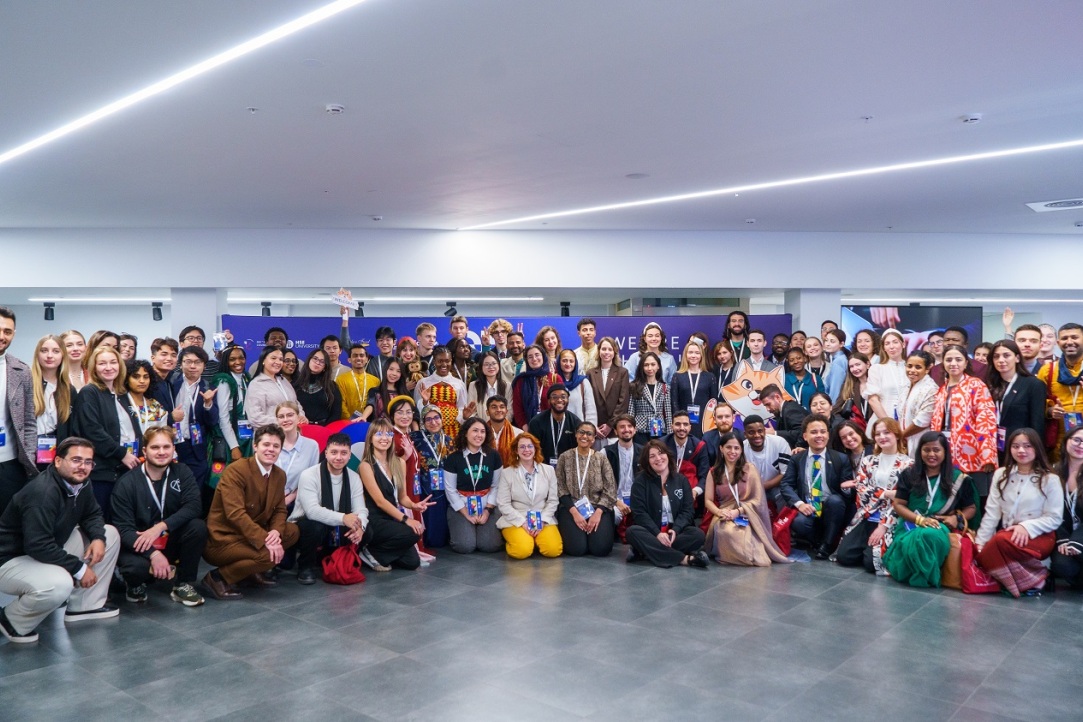
The BRICS International School: New Generation has concluded at HSE University, bringing together more than 100 participants from 38 BRICS and Global South countries. The attendees included early-career researchers, diplomats, entrepreneurs, journalists, and civil society representatives.
The BRICS International School: New Generation is one of the leading international educational initiatives for young leaders focused on global development and cooperation within the BRICS framework. Held annually with the support of the Russian Ministry of Foreign Affairs, its intellectual and organisational hub is the BRICS Expert Council–Russia, based at HSE University. This partnership ensures strong academic expertise and systematic support for training the next generation of BRICS specialists.
This year, the BRICS International School took place from October 28 to November 1 as part of the Priority 2030 programme, in partnership with the Alexander Gorchakov Public Diplomacy Fund and MGIMO University.
Following tradition, participants met on the first day with Russia’s Deputy Foreign Minister and BRICS Sherpa, Sergey Ryabkov. He noted that the BRICS International School holds a special place among youth cooperation formats. In his view, the participation of young professionals, researchers, and journalists in such initiatives contributes to the development of the humanitarian dimension of cooperation and helps nurture ‘a new generation of thinkers and practitioners’ capable of working effectively in a multipolar world.
The official opening ceremony of the BRICS International School took place on October 29 at the HSE Cultural Centre. Victoria Panova, HSE Vice Rector, Head of the BRICS Expert Council–Russia, and Russia’s Sherpa to the Women’s Twenty (W20), delivered the welcome address.
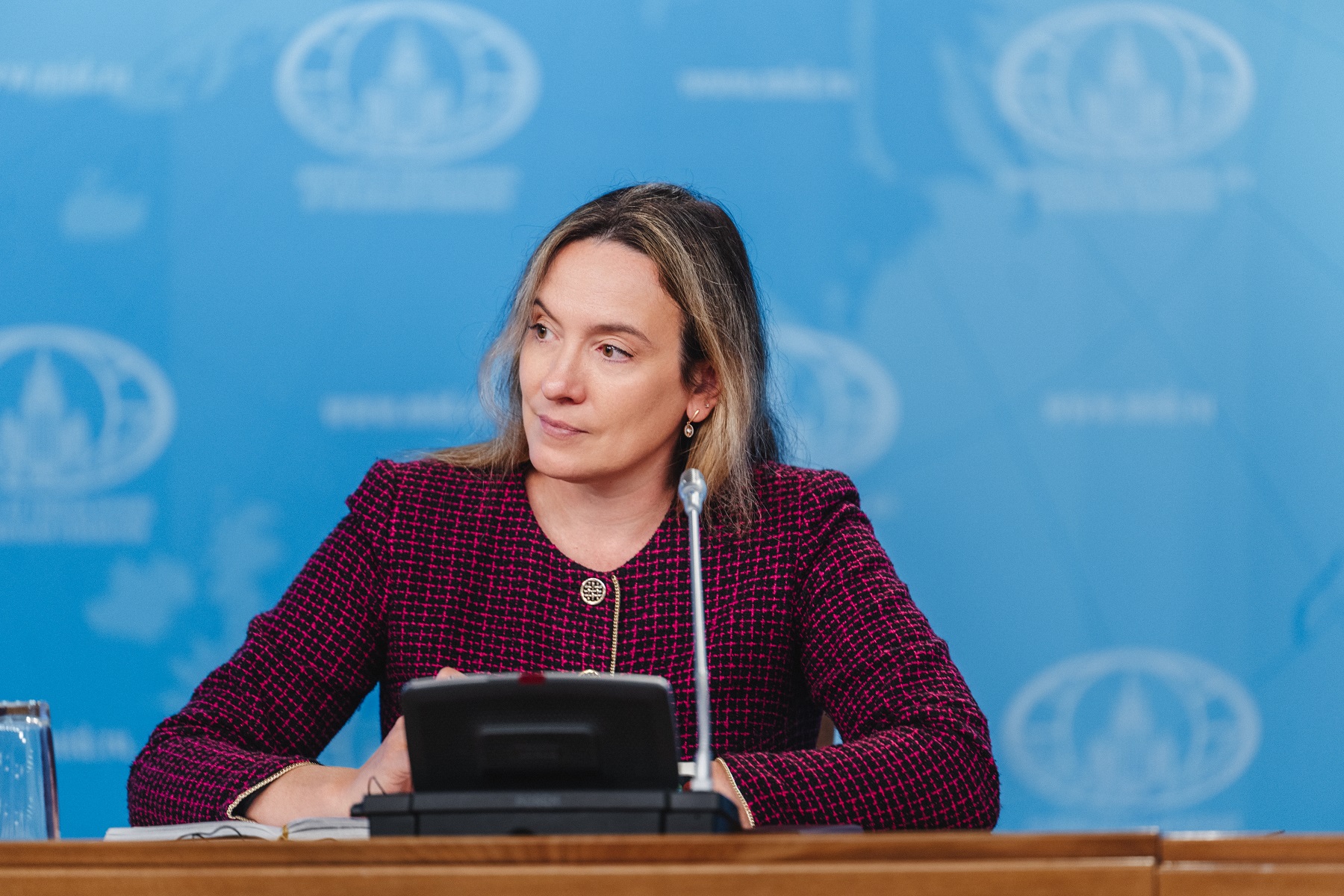
‘The BRICS International School was created as a platform for training a new generation of leaders—those ready to build communication between countries and seek balanced solutions in times of global change. Your generation faces a challenging yet inspiring task: to help make the world more sustainable, fair, and humane. The correct solutions are not always obvious, which is why we need people who think creatively, who can listen, unite, and inspire others. Openness, creativity, mutual respect, and readiness for honest dialogue—these are the values we foster within the BRICS International School: New Generation,’ said Victoria Panova.
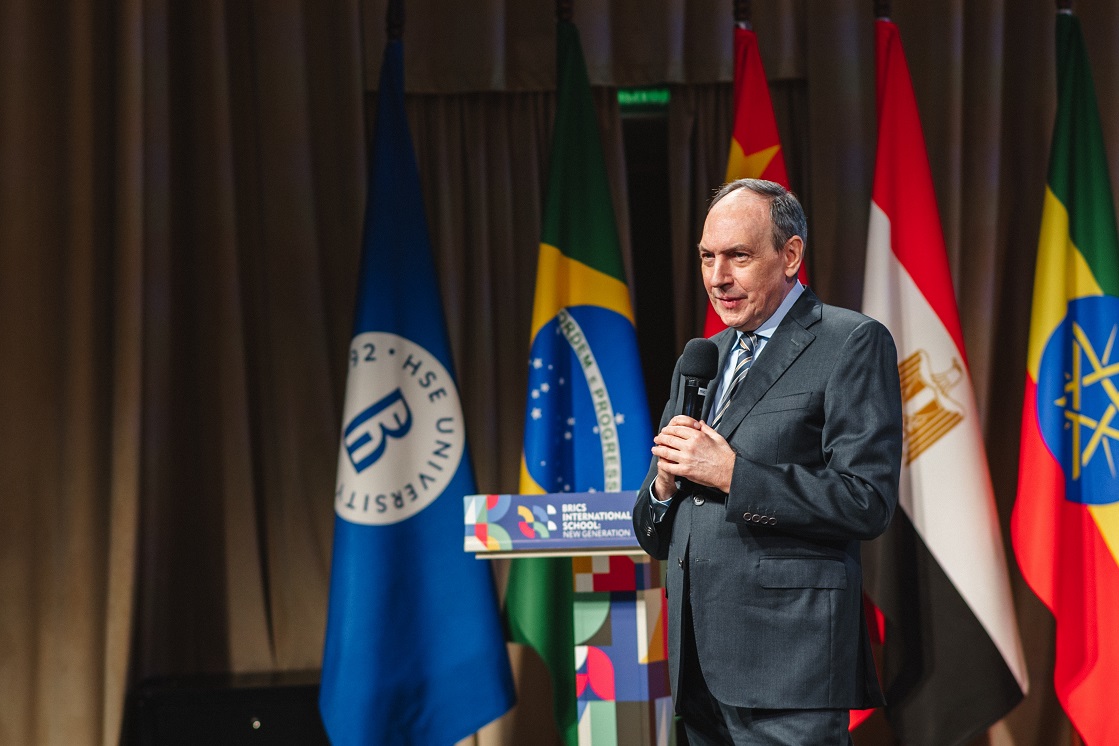
The honorary guest of the opening ceremony was Vyacheslav Nikonov, First Deputy Chairman of the State Duma Committee on International Affairs. ‘BRICS is about the future. The principles of this association reflect what relations between countries and people should be like: without confrontation, without domination, and with respect for each other. The world extends much further than the West, and the very idea of BRICS is, essentially, a turning of the globe—a way of seeing the world through the eyes of the majority,’ he emphasised.
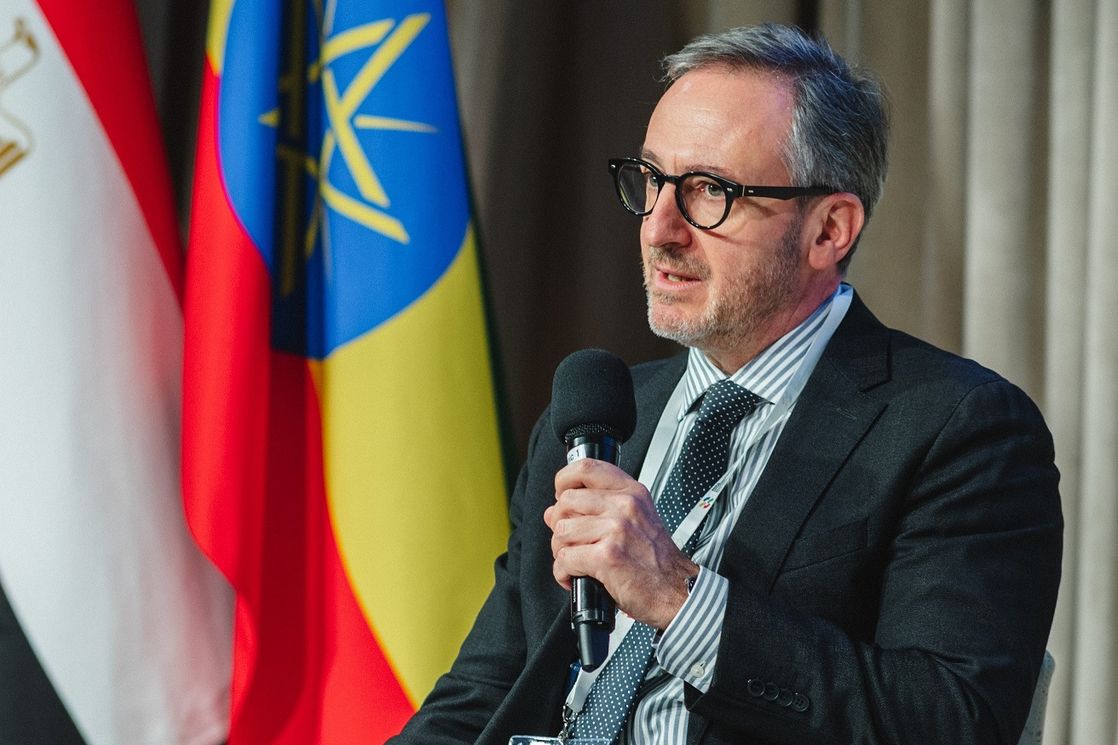
Another distinguished guest—Sérgio Rodrigues dos Santos, Ambassador Extraordinary and Plenipotentiary of the Federative Republic of Brazil—delivered a lecture titled ‘The Role of Latin America in the Modern System of International Relations: The Legacy of Brazil’s BRICS Chairship.’
From 29 to 31 October, participants of the BRICS International School took part in a diverse programme of lectures, seminars, workshops, TED Talk, expert interviews, brainstorming sessions, and a guided tour of HSE University’s Pokrovsky Bulvar campus.


HSE University faculty members were actively involved in the School’s work, including Fyodor Lukyanov, Research Professor at the Faculty of World Economy and International Affairs; Dmitri Trenin, Director of the Institute for Global Military Economics and Strategy; Dmitry Suslov, Deputy Director of the Centre for Comprehensive European and International Studies; Oleg Dmitriev, Deputy Director of the Institute of Media; and Anna Podpryatova, Director for Marketing Communications.
The final event of the BRICS International School was a tour of Moscow.
Participants shared their impressions with the HSE News Service.
Ali Mohamed, Egypt
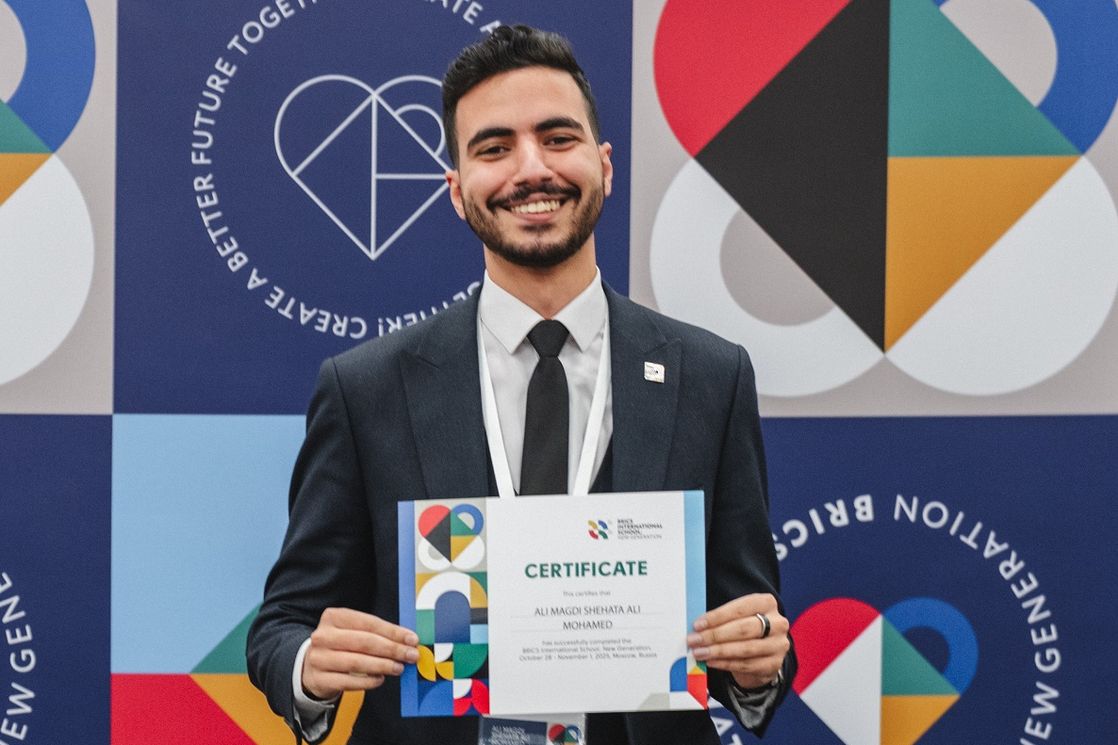
— It was an honour to take part in the BRICS International School for the second time. Once again, I was deeply impressed; the organisation was flawless, and the team was incredibly kind and responsive. I am sure this experience will be a springboard for my career. Thanks to the programme, I not only made friends from different countries but also had the chance to discuss current international issues with them—something that will undoubtedly be useful in the future.
Mohammad Ramin Hakimy, Afghanistan
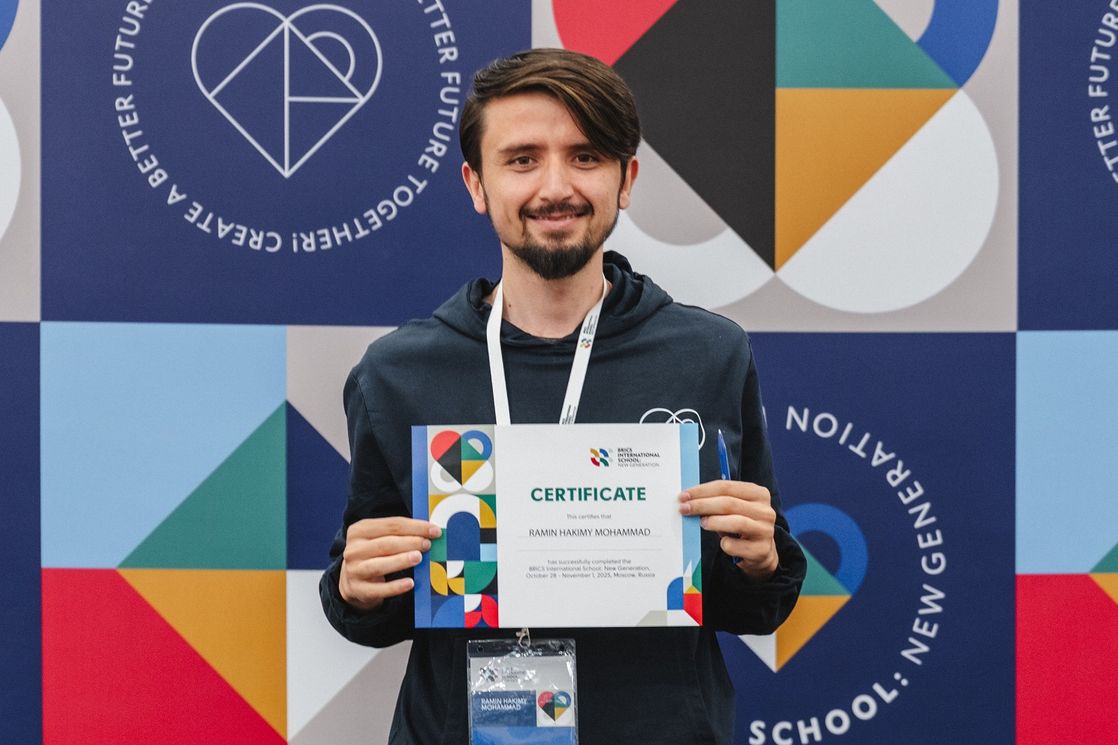
— Taking part in the BRICS International School was an invaluable experience for me. As a future diplomat studying international law, I am grateful for the opportunity to learn from leading experts and communicate with colleagues from more than 30 countries. Although Afghanistan is not yet a member of BRICS, we hope this will change. I am convinced that such programmes are extremely important for strengthening cooperation between our countries.
Indra Enkh-Amgalan, Mongolia
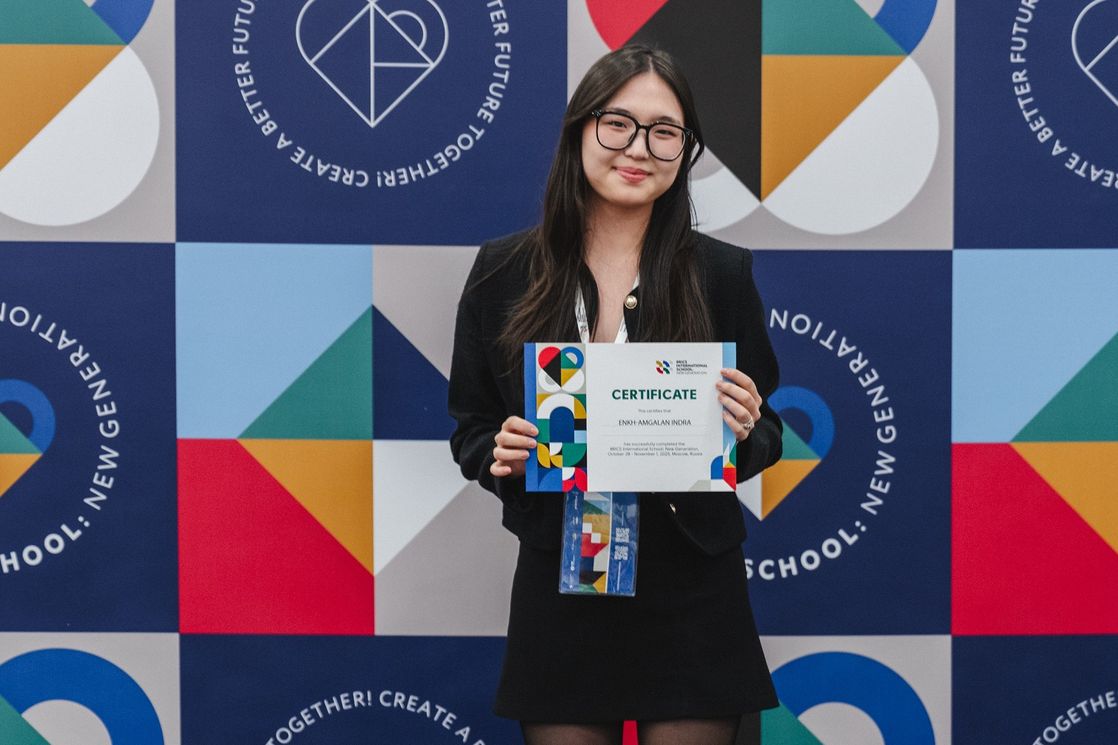
— Meeting future colleagues from different countries at the BRICS International School broadened my professional horizons. I especially cherish the memories of discovering Russian cuisine. Shared lunches became an informal space for sincere discussions with bright and original participants. I am genuinely grateful to the organisers for the carefully selected speakers—their unique methods, personal stories, and depth of expertise created a truly special educational environment.
Sung Panhapich, Cambodia
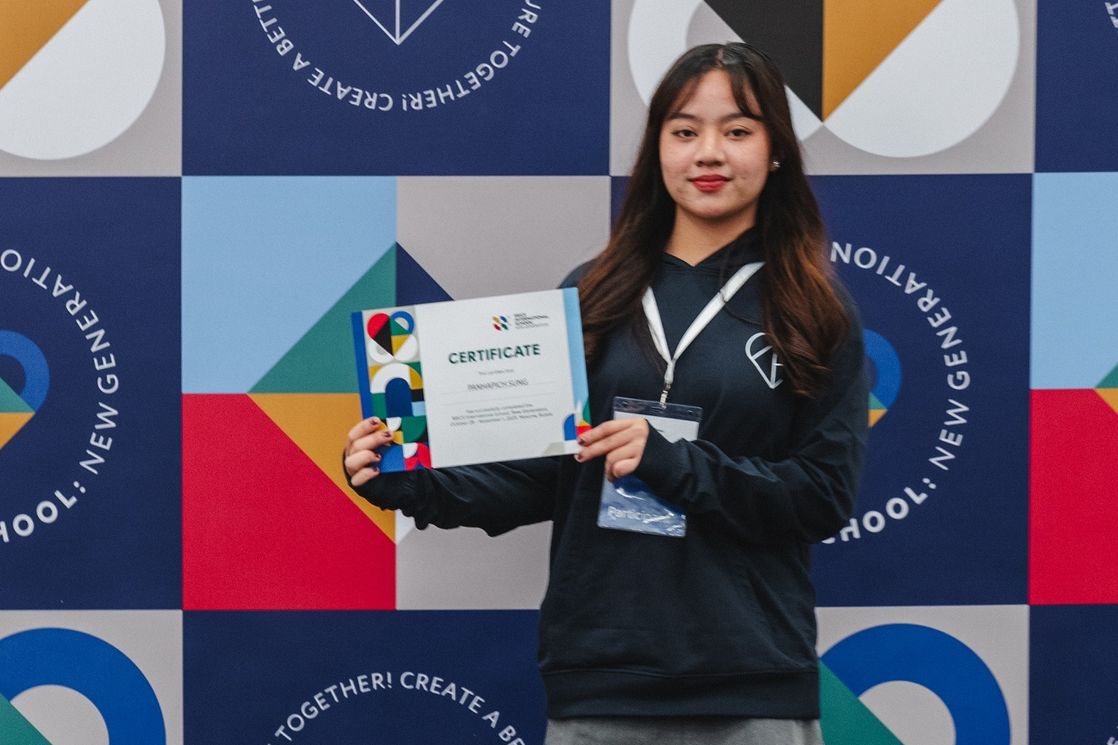
— No one from my country had ever taken part in the BRICS International School before, so it was a great honour for me to represent Cambodia here. The School left me with many wonderful impressions—the renowned speakers and professors from leading Russian universities were excellent. I learnt a lot from them and had the chance to observe their teaching methods. Moreover, I met many amazing students from different countries; we became friends and exchanged contacts. The School will undoubtedly have a lasting impact on my future.

See also:

HSE University Expands Cooperation with Malaysia in Technology Foresight
HSE University researchers will take part in a study of the future of engineering education in Malaysia, while the Malaysian Industry-Government Group for High Technology (MIGHT) will use the iFORA big-data analysis system to validate the findings of its foresight research. These are the outcomes of a visit by HSE representatives to Kuala Lumpur.
Researchers Assess Contributions of BRICS Countries to Leading ML/AI Conferences
The HSE Scientometrics Centre analysed more than 104,000 papers published between 2020 and 2025 and presented at ten top-level A* conferences ranked by ICORE 2026. The researchers examined the contributions of Brazil, Russia, India, China and South Africa. Together, these countries accounted for around 40,800 publications, or 39.2% of the total. However, the distribution is highly uneven, and a shared BRICS research space has yet to emerge.
Biologists Discover 'Molecular Fingerprint' of Preeclampsia
Researchers at HSE University employed a new method to model hypoxia in placental cells during pregnancies complicated by preeclampsia and identified molecular markers of tissue hypoxia. Since hypoxia is one of the key mechanisms underlying preeclampsia, these findings are important for a more accurate and timely diagnosis of the disease and for the development of effective treatment methods. The paper has been published in Placenta.
‘Hedgehog’ Versus ‘Relatives’: Researchers Measure How the Brain Responds to Unexpected Words During Natural Speech
Russian neurophysiologists, including researchers from HSE University, have demonstrated the feasibility of using event-related fields (ERFs) to study brain activity during natural speech perception. The researchers showed that this approach can be applied not only to individual words but also to continuous speech. Their findings indicate that words whose meanings differ significantly from the preceding context require longer processing times. The study also reveals that the brain processes function words in two stages: first, it identifies their grammatical role and then uses this information to predict the next word. The study has been published in Frontiers in Human Neuroscience.
Scientists Develop Algorithm for More Reliable Processors in Data Centres
Researchers from HSE MIEM and Samara University have developed the LRF-3D algorithm to automatically bypass idle nodes in three-dimensional networks-on-chip. Thanks to its hierarchical architecture, the algorithm outperforms existing solutions in both speed and path accuracy, improving processor reliability for use in data centres, supercomputers, and AI computing. The source code and test results are publicly available.
Researchers Rank Recommendation Algorithms Using Sports Tournament Model
Researchers from the AI and Digital Science Institute at the HSE Faculty of Computer Science have developed an approach for selecting recommendation algorithms more effectively. Their approach uses pairwise comparisons of algorithms to create a tournament table, with the overall ranking based on their performance across all datasets in the tournament. This can reduce the number of algorithms that need to be tested when developing new services, saving both time and money. The study was presented at the 32nd ACM SIGKDD Conference on Knowledge Discovery and Data Mining (KDD 2026).
Researchers Develop Method for Direct Generation of Regulatory DNA
Researchers at HSE University have developed a model for generating promoters and enhancers—DNA sequences that regulate gene activity. The model works directly with DNA nucleotides, without first transforming them into a continuous numerical representation. This solution could be useful for applications in synthetic biology and gene therapy. The study results were presented at the ICLR 2026 Workshop ‘Generative AI in Genomics (Gen^2): Barriers and Frontiers.’
Researchers at HSE University and Sber Train Neural Networks to Better Predict User Preferences
The HSE FCS AI and Digital Science Institute and Sber have introduced a new architecture for recommendation systems that combines two classes of models, enabling algorithms to better predict users’ interests and needs. A preprint of the paper has been published on arxiv.org and presented at Urban ML.
HSE Graduate School of Business and Alfa-Bank Hold Summer School for Students from China
Twenty-seven students from Chinese universities took part in the international summer school ‘Digital Product Management’ organised by the HSE Graduate School of Business and Alfa-Bank. Over the course of a week, participants explored the Russian economy and business environment, learned about current technology trends, and worked through the key stages of digital product development step by step—from researching user needs and defining a problem to developing a prototype and presenting their final project.
Physicists Discover What Happens Inside a Stable Vortex
Large vortices with characteristic spiral arms are often observed in the atmosphere and the ocean. Physicists from HSE University have explained how these structures form and why they retain their shape. The researchers found that velocities at points located along the same vortex arc remain correlated even over long distances. At the same time, this correlation weakens rapidly with increasing distance from the vortex centre. These differences help explain the formation of spiral arms and may improve models of atmospheric and oceanic currents. The findings have been published in Physical Review Fluids.