

HSE Tops Ranking of Universities Participating in Priority 2030 Programme

The Russian Ministry of Science and Higher Education has published an updated list of participants in the Priority 2030 programme. A total of 106 universities will receive support this year. HSE University was included in the first group and topped the ranking.
Meetings of the Priority 2030 Council, chaired by Minister Valery Falkov, were held from November 18 to 21. Representatives of the ministry, along with experts from business and the academic community, reviewed the universities’ preliminary performance results. Ninety-nine universities, as well as candidate institutions recommended for participation in the programme’s main track, presented their progress to the council.

‘This work has resulted in an updated list of Priority universities. A total of 106 universities will receive support under the programme this year. The total amount of funding to be distributed among the institutions stands at 26.8 billion rubles. It is important to note that most subsidy recipients are regional universities. Today they compete on an equal footing with leading Moscow and St Petersburg institutions for the best outcomes in implementing their strategic technological projects,’ said Valery Falkov.
Eighty-seven universities from 36 regions have been included in the programme’s main track. These universities have been divided into three groups:
Group One comprises 13 universities, each set to receive around 830 million rubles
Group Two includes 22 universities (around 400 million rubles each)
Group Three includes 52 universities (up to 100 million rubles each)
Group One includes HSE University, MIPT, MEPhI, MISIS University, Far Eastern Federal University, Ural Federal University, Tomsk State University, and others. The approved list of programme participants and candidates for 2026 can be found via the link (in Russian).
A key innovation in 2025 is the programme’s focus on enabling Russia to achieve technological leadership. In 2025, universities participating in Priority 2030 have planned projects across nine areas of the national technological leadership initiative. Major project themes include biomedical technologies, microelectronics and photonics, new materials with tailored properties, transport solutions for various applications, and both new and traditional energy sectors.
Nikita Anisimov, HSE Rector
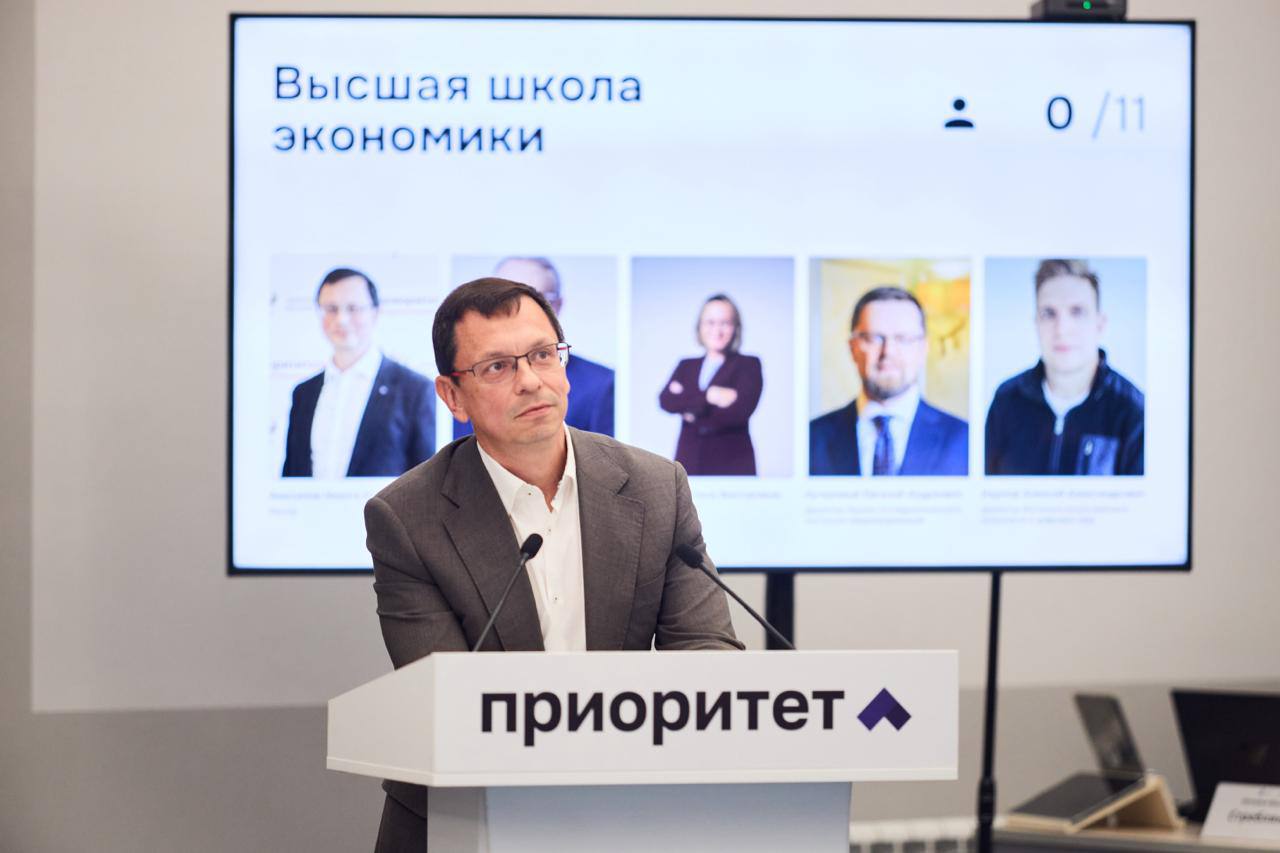
‘The Priority 2030 Strategic Academic Leadership Programme Council has reaffirmed the high level of responsibility assumed by HSE University in delivering its strategic initiatives. HSE faces serious challenges related to the need to focus on concrete, measurable outcomes and on adopting advanced technologies generated by the scientific community. These challenges must be transformed into clear tasks for the entire university team—for every faculty, department, and member of staff. Our main goal is not only to contribute actively to addressing the current issues faced by the academic sector and the country’s economy, but also to pursue accelerated development and to shape the future. This will be the focus of all our future work.’
The Priority 2030 programme, launched by the Russian Ministry of Science and Higher Education in 2021, is now the largest university-support initiative in the country’s history. By order of President Vladimir Putin, it has been extended until 2030. From 2025, the Priority 2030 programme will be implemented as part of the Youth and Children national project.

See also:

Researchers Develop Method for Direct Generation of Regulatory DNA
Researchers at HSE University have developed a model for generating promoters and enhancers—DNA sequences that regulate gene activity. The model works directly with DNA nucleotides, without first transforming them into a continuous numerical representation. This solution could be useful for applications in synthetic biology and gene therapy. The study results were presented at the ICLR 2026 Workshop ‘Generative AI in Genomics (Gen^2): Barriers and Frontiers.’
Researchers at HSE University and Sber Train Neural Networks to Better Predict User Preferences
The HSE FCS AI and Digital Science Institute and Sber have introduced a new architecture for recommendation systems that combines two classes of models, enabling algorithms to better predict users’ interests and needs. A preprint of the paper has been published on arxiv.org and presented at Urban ML.
HSE Graduate School of Business and Alfa-Bank Hold Summer School for Students from China
Twenty-seven students from Chinese universities took part in the international summer school ‘Digital Product Management’ organised by the HSE Graduate School of Business and Alfa-Bank. Over the course of a week, participants explored the Russian economy and business environment, learned about current technology trends, and worked through the key stages of digital product development step by step—from researching user needs and defining a problem to developing a prototype and presenting their final project.
Physicists Discover What Happens Inside a Stable Vortex
Large vortices with characteristic spiral arms are often observed in the atmosphere and the ocean. Physicists from HSE University have explained how these structures form and why they retain their shape. The researchers found that velocities at points located along the same vortex arc remain correlated even over long distances. At the same time, this correlation weakens rapidly with increasing distance from the vortex centre. These differences help explain the formation of spiral arms and may improve models of atmospheric and oceanic currents. The findings have been published in Physical Review Fluids.
HSE Computer Science Researchers Win Gold Medal at International Machine Learning Competition
A team comprising HSE International Laboratory of Statistical and Computational Genomics researchers Aleksei Shmelev and Nikita Chervov, 2025 graduate of the HSE Faculty of Computer Science’s Master’s programme in Data Analysis in Biology and Medicine Ivan Gevorkov, and two students from the United States achieved an outstanding result at the 2026 NeuroGolf international machine learning championship. The team won a gold medal and placed seventh overall.
‘Working with AI Solves a Wide Range of Engineering Problems’
Artificial intelligence is a working tool based on a balanced combination of algorithms and engineering. Experts and doctoral students from the HSE Moscow Institute of Electronics and Mathematics explain how AI technologies can improve an application, device, or system, and what engineering tasks are solved in the process.
‘The Peak of Stupidity’ and ‘The Valley of Despair’: HSE Economists Propose an Explanation for the Dunning–Kruger Effect
The Dunning–Kruger effect, which describes a sharp surge in self-confidence among beginners followed by an equally rapid decline as they gain experience, can be explained by the nature of the learning process and the acquisition of new knowledge. This conclusion was reached by Andrey Vorchik of the HSE Faculty of Economic Sciences together with independent researcher Murat Mamyshev. They developed a mathematical model of learning and demonstrated how subjective confidence is formed and changes as knowledge accumulates, as well as how teachers can reduce the ‘valley of despair’ experienced by learners.
Advancing Collaboration: HSE Faculty of Computer Science and Harbin Institute of Technology Hold Joint Seminar
From July 13 to 16, 2026, the Faculty of Computer Science hosted the Russian–Sino Research Seminar on Machine Learning Applications, organised by the HSE Laboratory for Cloud and Mobile Technologies in partnership with the Harbin Institute of Technology (China). A delegation comprising seven students and three university representatives travelled to Moscow to take part in an intensive four-day programme.
A New Section on AI and a Prizewinning Paper: Early-Career HSE Researchers Take Part in IEEE EDM Conference
The 27th IEEE International Conference of Young Professionals in Electron Devices and Materials (EDM) has taken place in the Altai Republic. This year, researchers from HSE University presented the results of their research and were involved in organising a new section on artificial intelligence. A paper by HSE master’s student Rodion Sidorenko was awarded third place in the research paper competition at the conference.
HSE and Karakalpak State University Agree on Cooperation
HSE University and Berdakh Karakalpak State University have signed a cooperation agreement to strengthen collaboration in research, education, and innovation. Through the expertise of its Сentre of Digital Technologies for Nature-Based Solutions of the Carbon Measurement Supersites Programme, HSE University will work with colleagues from Uzbekistan to assess climate risks and evaluate opportunities for implementing nature-based climate projects in the region. The partners also plan to develop joint research and educational programmes.