

Ruza Reboot: Legendary Camp Welcomes HSE Students and Staff
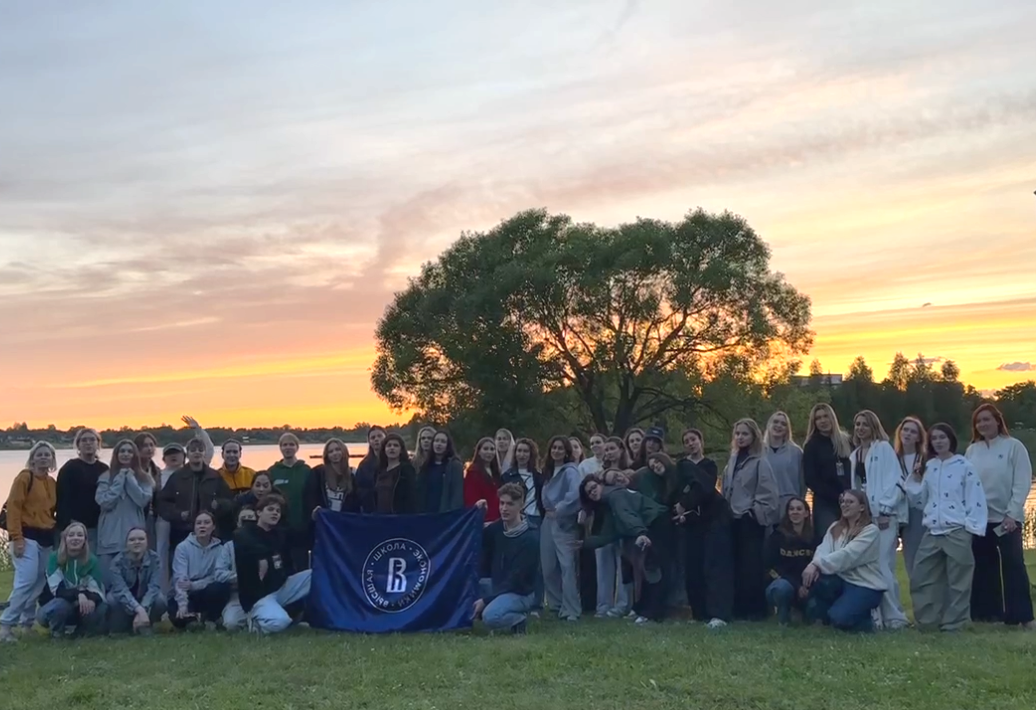
In the Moscow Region, HSE’s country complex located on the banks of the Ruza Reservoir and bearing the same name Ruza, has reopened its doors. Faculties and other university departments can now apply on the complex’s website (in Russian) to hold events there in September.
The history of Ruza began over 60 years ago, but the camp’s operations were suspended in 2016 to carry out mandatory renovations. Its revival started in 2022 thanks to the efforts of an initiative group of students supported by HSE Rector Nikita Anisimov. A team was assembled, bringing together specialists from various university departments along with invited experts of architecture and development.
In 2023, Building No. 9 underwent a major refurbishment. The first to move into the updated facility were summer student construction brigades from the university.
In 2024, exterior lighting and perimeter CCTV security systems were installed across the Ruza complex.
In 2025, the site received an anti-terrorism safety certificate approved by EMERCOM of Russia, the Ministry of Internal Affairs, and other authorities. At the same time, a state-of-the-art modular canteen was put into operation, meeting all sanitary and technical standards.
Today, Ruza’s infrastructure includes a modern building that can accommodate 84 people, a new canteen with 64 seats, a fully equipped medical centre, and a spacious marquee for large outdoor events.

Veronika Minina
‘Ruza is a place with a rich history and traditions, where generations of students and teachers have relaxed, studied, and worked. Today we are reviving this camp and making it a unique environment to develop the professional and creative potential of our students, staff, and partners. We see Ruza as a promising venue for new formats of educational, project-based, and cultural events,’ said HSE Vice Rector Veronika Minina.
This summer, Ruza hosted field training sessions for first-year students of the Faculties of Geography and Geoinformation Technology, Biology and Biotechnology. The Student Initiative Support Centre organised a dance convention for students from all four campuses, while the eLearning Office held an offsite corporate training session.
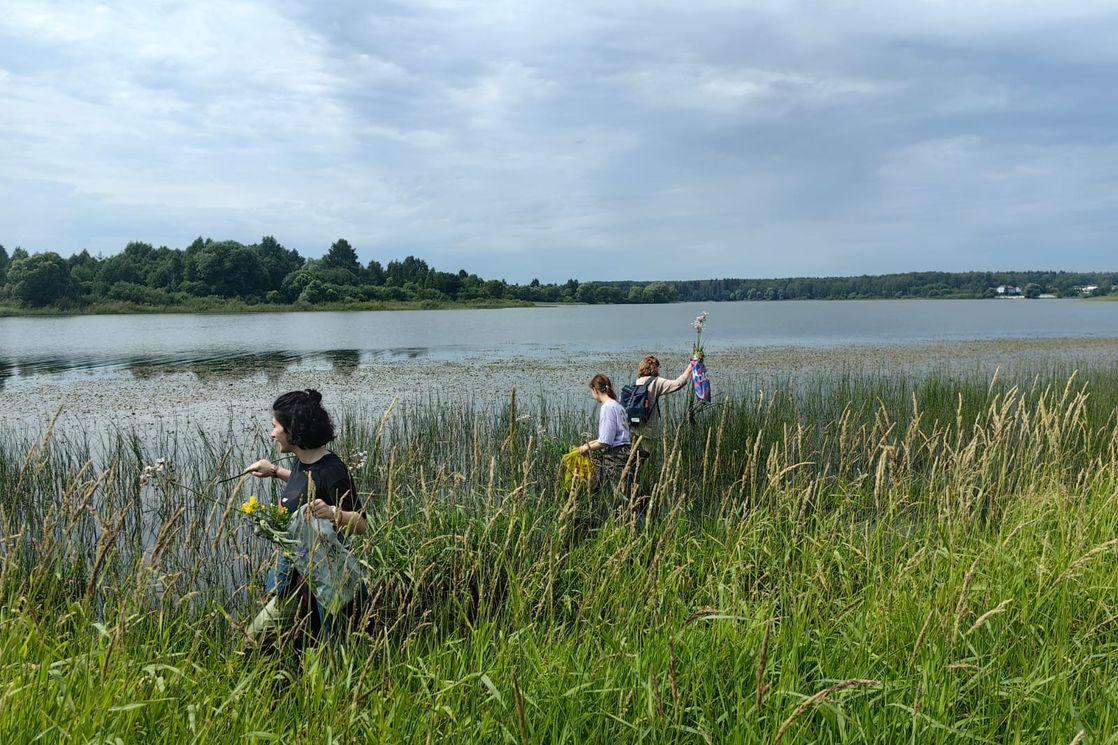

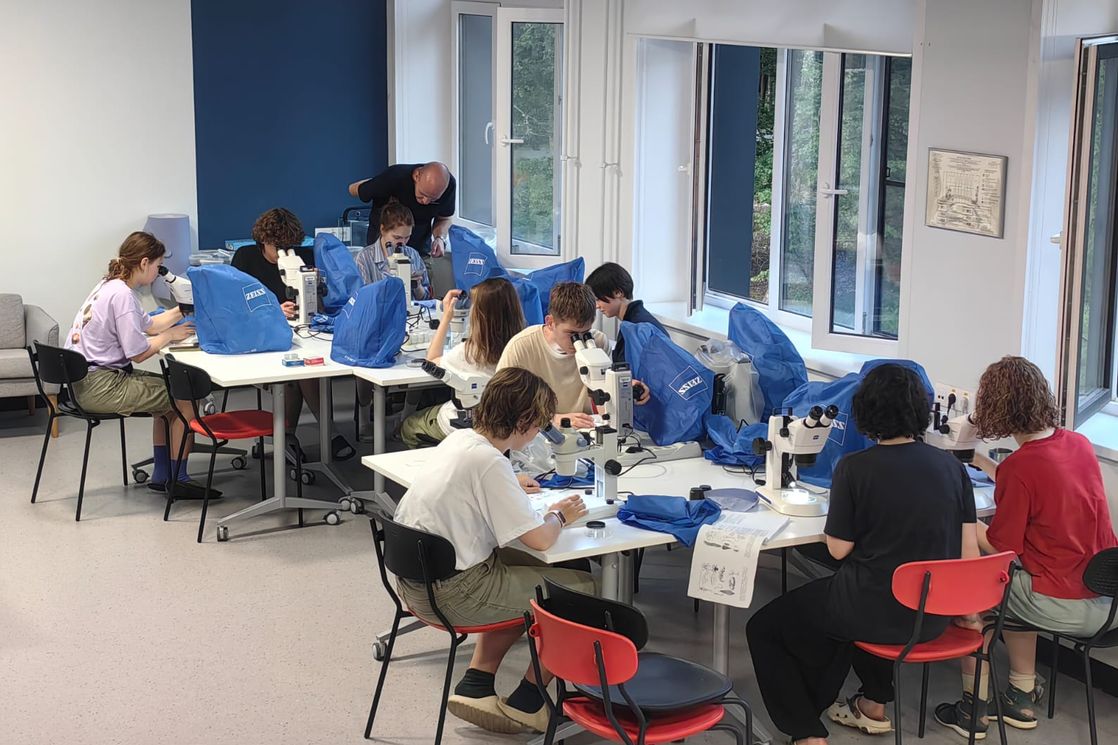


Participants shared their impressions of the camp sessions.
‘Ruza is a true source of strength. Here, you meet new people and spend time actively,’ noted Artemy Panarin, a student of the Information Science and Computation Technology programme.
‘It is a wonderful place where you can escape the city’s hustle and bustle and just live in the moment. Students from various disciplines gather here,’ said Ekaterina Nikitina, a student of Advertising and Public Relations.
‘I have been to Ruza three times. Each visit brought thousands of memories, dozens of new acquaintances, a touch of sunburn, and an immense boost of energy,’ recalled Elizaveta Mikhailova, a Journalism student.
Egor Danilov, another student of Information Science and Computation Technology, admitted, ‘I truly fell in love with this place—the atmosphere, the people, and the events that happen here.’
HSE University would like to express our gratitude to everyone who contributed to bringing this complex back to life. We thank the designers, builders, staff, and students for their hard work, as their joint efforts have restored an important part of our university's history. Ruza has once again become the place you always wanted to return to.
Faculties and departments can apply to host events in September by filling out the online form (in Russian).

Veronika Minina
See also:

Biologists Discover 'Molecular Fingerprint' of Preeclampsia
Researchers at HSE University employed a new method to model hypoxia in placental cells during pregnancies complicated by preeclampsia and identified molecular markers of tissue hypoxia. Since hypoxia is one of the key mechanisms underlying preeclampsia, these findings are important for a more accurate and timely diagnosis of the disease and for the development of effective treatment methods. The paper has been published in Placenta.
‘Hedgehog’ Versus ‘Relatives’: Researchers Measure How the Brain Responds to Unexpected Words During Natural Speech
Russian neurophysiologists, including researchers from HSE University, have demonstrated the feasibility of using event-related fields (ERFs) to study brain activity during natural speech perception. The researchers showed that this approach can be applied not only to individual words but also to continuous speech. Their findings indicate that words whose meanings differ significantly from the preceding context require longer processing times. The study also reveals that the brain processes function words in two stages: first, it identifies their grammatical role and then uses this information to predict the next word. The study has been published in Frontiers in Human Neuroscience.
Scientists Develop Algorithm for More Reliable Processors in Data Centres
Researchers from HSE MIEM and Samara University have developed the LRF-3D algorithm to automatically bypass idle nodes in three-dimensional networks-on-chip. Thanks to its hierarchical architecture, the algorithm outperforms existing solutions in both speed and path accuracy, improving processor reliability for use in data centres, supercomputers, and AI computing. The source code and test results are publicly available.
Researchers Rank Recommendation Algorithms Using Sports Tournament Model
Researchers from the AI and Digital Science Institute at the HSE Faculty of Computer Science have developed an approach for selecting recommendation algorithms more effectively. Their approach uses pairwise comparisons of algorithms to create a tournament table, with the overall ranking based on their performance across all datasets in the tournament. This can reduce the number of algorithms that need to be tested when developing new services, saving both time and money. The study was presented at the 32nd ACM SIGKDD Conference on Knowledge Discovery and Data Mining (KDD 2026).
Researchers Develop Method for Direct Generation of Regulatory DNA
Researchers at HSE University have developed a model for generating promoters and enhancers—DNA sequences that regulate gene activity. The model works directly with DNA nucleotides, without first transforming them into a continuous numerical representation. This solution could be useful for applications in synthetic biology and gene therapy. The study results were presented at the ICLR 2026 Workshop ‘Generative AI in Genomics (Gen^2): Barriers and Frontiers.’
Researchers at HSE University and Sber Train Neural Networks to Better Predict User Preferences
The HSE FCS AI and Digital Science Institute and Sber have introduced a new architecture for recommendation systems that combines two classes of models, enabling algorithms to better predict users’ interests and needs. A preprint of the paper has been published on arxiv.org and presented at Urban ML.
HSE Graduate School of Business and Alfa-Bank Hold Summer School for Students from China
Twenty-seven students from Chinese universities took part in the international summer school ‘Digital Product Management’ organised by the HSE Graduate School of Business and Alfa-Bank. Over the course of a week, participants explored the Russian economy and business environment, learned about current technology trends, and worked through the key stages of digital product development step by step—from researching user needs and defining a problem to developing a prototype and presenting their final project.
Physicists Discover What Happens Inside a Stable Vortex
Large vortices with characteristic spiral arms are often observed in the atmosphere and the ocean. Physicists from HSE University have explained how these structures form and why they retain their shape. The researchers found that velocities at points located along the same vortex arc remain correlated even over long distances. At the same time, this correlation weakens rapidly with increasing distance from the vortex centre. These differences help explain the formation of spiral arms and may improve models of atmospheric and oceanic currents. The findings have been published in Physical Review Fluids.
HSE University and the Government of Perm Krai Expand the Development of Creative Industries
HSE University and the Government of Perm Krai have signed a strategic partnership agreement. The document, signed by HSE University President Nikita Anisimov and Perm Krai Governor Dmitry Makhonin, defines new areas of collaboration in the creative economy, education, and human resources in Primakamye.
‘The Peak of Stupidity’ and ‘The Valley of Despair’: HSE Economists Propose an Explanation for the Dunning–Kruger Effect
The Dunning–Kruger effect, which describes a sharp surge in self-confidence among beginners followed by an equally rapid decline as they gain experience, can be explained by the nature of the learning process and the acquisition of new knowledge. This conclusion was reached by Andrey Vorchik of the HSE Faculty of Economic Sciences together with independent researcher Murat Mamyshev. They developed a mathematical model of learning and demonstrated how subjective confidence is formed and changes as knowledge accumulates, as well as how teachers can reduce the ‘valley of despair’ experienced by learners.